
Myth and the reality of annual allowable cut in BC forests

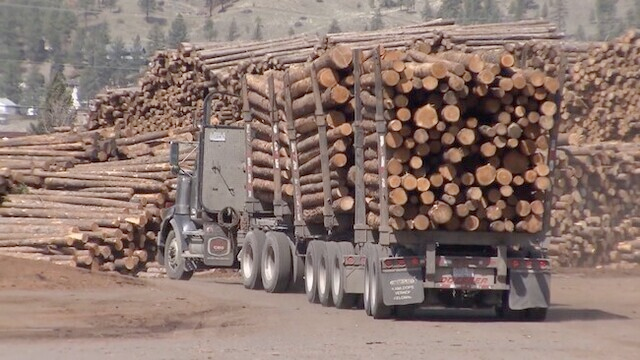
Eli Pivnick argues a new approach is needed to logging in B.C. Eli lives in the north Okanagan near Vernon and has a PhD in insect ecology from Université Laval in Quebec City. He has conducted insect research in the Canadian Prairies for the National Research Council, Agriculture Canada and Parks Canada.
from The Castanet Dec 23, 2025
The annual allowable cut is the cornerstone for how the B.C. government manages logging on Crown forested lands.
It is a volume-based limit to the timber harvest. There are different kinds of forest tenure but they all are governed by an AAC set by B.C.’s chief forester. According to the Ministry of Forests website, “forest tenures require ongoing compliance with forest management plans, sustainable practices, and government reporting” and, “The process is heavily regulated and focuses on performance, investment, and community engagement, with major reviews occurring periodically.”
It sounds very disciplined, scientific and sustainable but the B.C. forest industry is logging much less than the AAC permits, as you can see from the accompanying graph.
In fact, in 2024, the timber harvest was only 60% of the AAC. Even at the low level (relative to the AAC), our forests are in crisis. According to former Liberal MLA, Mike Morris in his 2020 report, almost 50,000 jobs in forestry were lost between 1993 and 2016 and job losses continue.
Canfor, one of B.C.’s largest forestry companies, closed 10 of its 13 mills in the last decade. Fish and wildlife populations are also in serious decline. The spotted owl, also dependent on mature forests has been extirpated from B.C. forests.
As far back as 2007, the B.C. Conservation Data Centre listed 490 species on the provincial “red list” of species most at risk. The greatest threat to 86% of species currently listed at risk is loss of habitat due to human activities, mostly logging.

Photo: Contributed The Evergreen Alliance
According to Younes Alila, a UBC hydrology professor, it takes 60 to 80 years of growth for trees to be effective in the hydrological cycle, holding back precipitation and shading the forest. Because of the extent of logging throughout B.C., he is able to demonstrate the risk of flooding, landslides and the associated droughts has greatly increased.
According to Charles Krebs at UBC and David Lindenmayer at the Australian National University, for the first 40 to 70 years of tree growth in western Northern America, forests are at elevated risk of wildfire. David Hughes, a former energy analyst at the Geological Survey of Canada, has shown the biggest greenhouse gas emitter in B.C. in years of large-scale wildfires are our forests.
So B.C. logging is contributing to fires which contribute to climate change, which is exacerbating the other effects of B.C. logging—namely the loss of biodiversity, floods, landslides and droughts.
It does not look like the AAC is as scientific and sustainable as the B.C. Ministry of Forests would have us believe.
Jennifer Houghton of the Boundary Forest Watershed Stewardship Society thinks she knows why. Tree farm licenses and some other forest tenures are usually given for a five-year period but are automatically renewed, effectively making them long-term rights. Therefore, companies include them as assets on their balance sheets.
In 2024, Canfor showed a value of $323 million for its forest tenures, while Interfor’s were valued at $158 million. A high AAC makes a forest tenure more valuable when the company sells it, as has been done recently, mostly to First Nations. Even when they don’t sell, a high AAC increases the value of the company is both important for shareholders and for the ability of the company to borrow money. As a result, companies can over-harvest until there is a shortage of fibre, the most common reason for mills to close.
Yet, they lobby the government to maintain an artificially high AAC, as well as to allow more cutting of old-growth forests and to get bailouts and subsidies. Most B.C. companies are owned, not by local communities, but are global assets of global investors. Those companies can, and do, exert extreme pressure on the B.C. government, which is an important reason why our forests are in crisis.
There are solutions. The BFWSS is calling for a New Forest Act. The act seeks to treat forests as critical public infrastructure (like roads, but for water, climate and fire protection) and shift management towards nature-directed stewardship, creating stable jobs in restoration and value-added products, rather than exporting raw logs.
Morris, as well as retired B.C. forestry consultant and author Herb Hammond, also see an ecological foundation for forest management as critical. Conservation North, a forest advocacy group in Prince George argues for a three-zone system—protection of all primary forests (never-logged even if they have burned or been insect infested) in one zone, restoration of degraded forests in a second and logging in a third.
What will not work is a new approach which only tinkers around the edges while not making any major reforms. But such appears to be the case with the Old Growth Strategic Review and its recommendations of 2020.
The ministry’s current proposal to allow more logging in protected areas and elsewhere under the false excuse of fire risk reduction will also make our situation worse.
Clearly radical change is needed and the forest industry will continue to resist that change.


Comments